

Sunday, February 1, 2015
The Buoys

Chestnut Turban
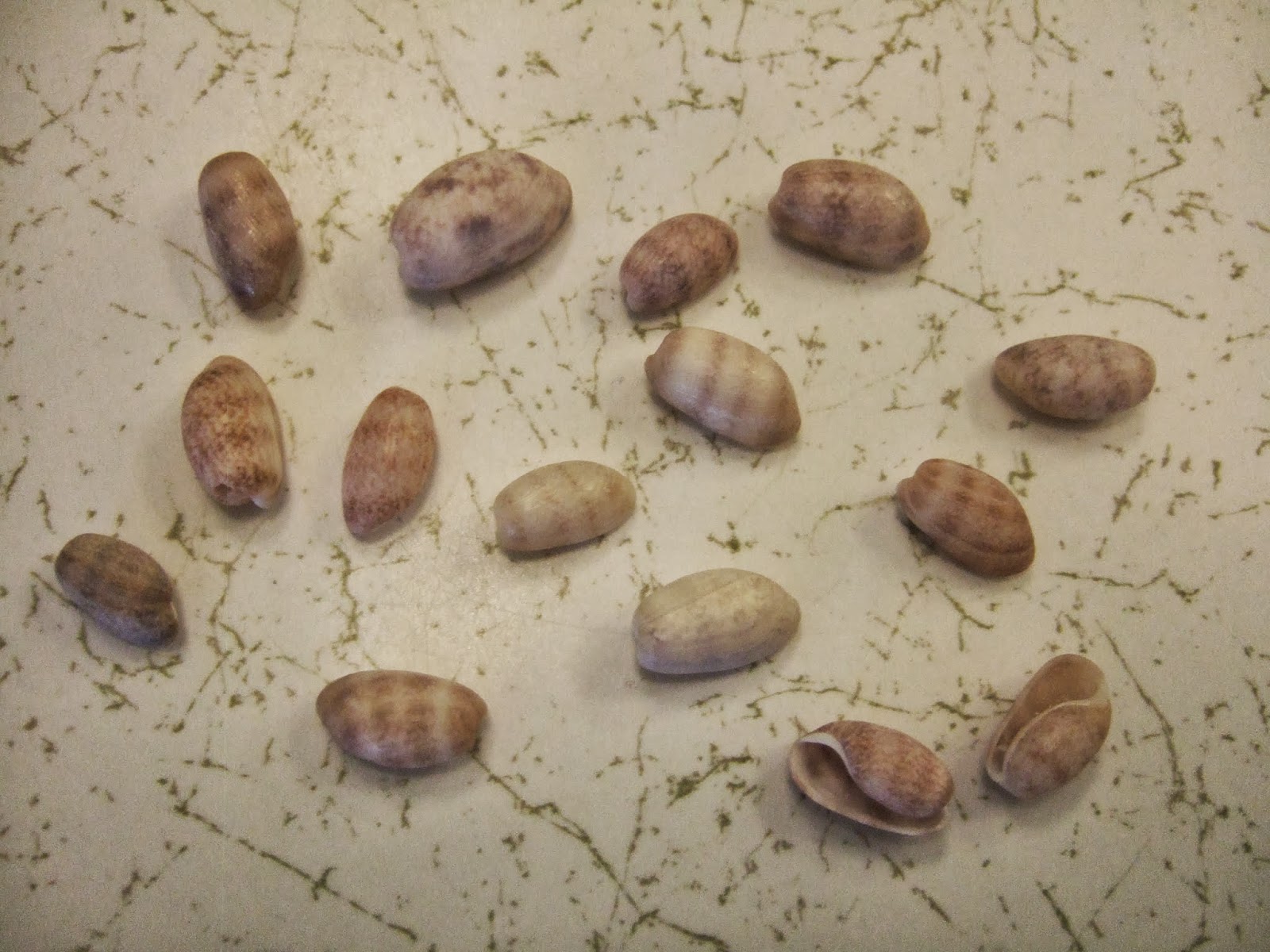
 The chestnut turban (Turbo castanea) are a species of mollusk in the gastropod class. Their colour ranges from brown-tan, to white and ginger stripes, to swirled shades of brown. On some of the specimens pictured, the outer layer of shell has broken off, reveling the pearly white inner shell. They are very important grazers of algae.
Sunday, October 5, 2014
Sunray Venus Clam

Thursday, August 28, 2014
Lesser Butterfly Ray


The lesser butterfly ray (Gymnura micrura) also sometimes known as smooth butterfly rays. They have no venomous barb. Some of their prey includes fish, crustaceans, and bivalves. Their dorsal side varies in colour from grey, to brown, to almost greenish. They prefer sandy environments and are often found in estuaries, bays, and off beaches.
Thursday, July 3, 2014
Pinfish
 |
| Juvenile Pinfish near Jetty |

Wednesday, March 19, 2014
Turkey Wing

Tuesday, February 25, 2014
Common Snook
.JPG) |
| Common snook off Lido |
.JPG) |
| Common snook off Lido |
.JPG) |
| Common snook off Lido |
other snooks. The large scaled fat snook is a more recently discovered species. Snook are usually thought of as a game fish, but there is so much more to snook than just being on the end of a line. Mote Marine Laboratory is doing a lot of research on the common snook, and are raising snook to restore native populations.
Tuesday, January 28, 2014
A Sad Trip To Lido
 |
| Brown Pelican |
 |
| Green Sea Turtle |
Last week, my mom and I walked on the beach after I was done volunteering at Save Our Seabirds. What we saw was very upsetting. First we found a dead brown pelican. Someone had put a cigar into its bill. I removed the cigar from its bill and adding it to the trash I was removing from the beach. We continued walking and in the distance, we saw some people taking something out of the water. We were pretty far away so I could not tell what it was right away, it looked a little like a sea turtle. I walked over and we saw that they pulled a dead sea turtle out of the water and were reporting it to Mote. It had several fibropapilloma tumors on it which could have caused its death. Another sad thing that was on the beach was the amount of trash that lined the shore. I must have picked up a hundred plastic bottle caps plus lots of other trash like an old battery. The reason why I am starting my beach clean-up project is to remove the trash on the beach before it gets eaten by animals and pollutes the ocean. I also hope to educate people about the threats that debris has on not just our coastline, but on the ocean and the animals that live in it.
 |
| Trash That We Picked Up |
Thursday, January 23, 2014
Sarasota Ocean Preservers
I recently got a grant to start my own beach cleanup. It is called Sarasota Ocean Preservers. I will probably start the program in March. Right now, I am working on a logo, and I am going to work on a website shortly. My logo will either have a devil ray, a green sea turtle, or a spotted eagle ray.
Update: I have had my cleanup program for over a year and have expanded to snorkel cleanups and I plan to start kayak cleanups as well. http://www.oceanpreservers.org/ is the address to the main website.
Update: I have had my cleanup program for over a year and have expanded to snorkel cleanups and I plan to start kayak cleanups as well. http://www.oceanpreservers.org/ is the address to the main website.
Wednesday, November 20, 2013
Yellow Stingray
 The yellow stingray (Urobatis jamaicensis), is also sometimes called the yellow spotted stingray. Their range stretches out from North Carolina, to Northern South America. They have an interesting feeding technique. They will lift their front half up so they resemble a cave, then their prey goes right to them thinking that the stingray is a cave.
Tuesday, November 5, 2013
Mote Intern Camping Trip
 |
| Bottlenose Dolphin |
 |
| Bottlenose Dolphin with Calf |
 |
| Bottlenose Dolphin |
 |
| Gopher Tortoise |
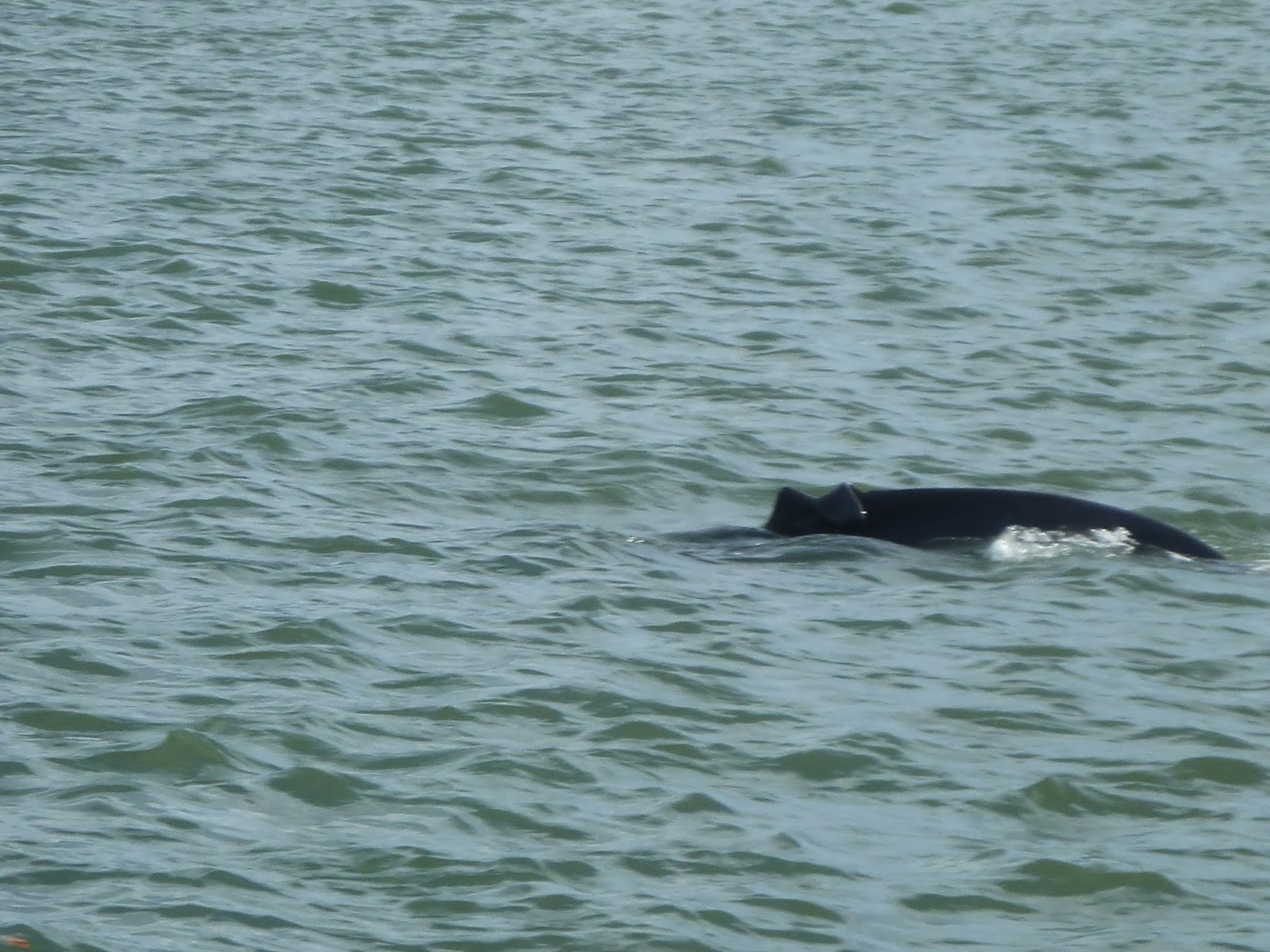
 Last weekend, I and eight other interns from the Mote went camping. We went on a dolphin boat and we got to help identify dolphins. We also went to Rookery Bay and to the Corkscrew Swamp Sanctuary. We saw lots of animals, including a huge alligator and a friendly praying mantis.
  |
| Bottlenose Dolphins |
 |
| Bottlenose Dolphin |
 |
| Corkscrew Swamp Sanctuary |

 |
| Frigate Birds |
 |
| Corkscrew Swamp Sanctuary |


Tuesday, October 29, 2013
Snorkling Pictures
.JPG) |
| Common Snook (Centropomus undecimalis) |
.JPG) |
| Sergeant Major (Abudefduf saxatilis) |
.JPG)

.JPG) |
| Stone Crab (Menippe mercenaria) |
(you can click on the photos to enlarge.)
.JPG) |
| Sergeant Major (Abudefduf saxatilis) |
.JPG) |
| Common Snook (Centropomus undecimalis) |

.JPG)
 |
| Sheepshead (Archosargus probatocephalus) |
 |
| Scaled Sardine (Harengula jaguana) |
 |
| Lesser Butterfly Ray (Gymnura micrura) |
 |
| Pinfish (Lagodon rhomboides) |
Tuesday, October 22, 2013
Spongy Decorator Crab
 The spongy decorator crab (Marcocoeloma trispinosum), is a species of decorator crab. They will put sponges, corals, and other things on themselves to camouflage. The one in the picture has covered himself with mushroom polyps. They stick the camouflage of choice on themselves like Velcro. They have little hook life hairs on their body which helps attach things to them. They will even change what they have on them depending on what is in their environment.
Tuesday, October 15, 2013
Strate Bubbles
 Strate bubbles (Bulla striata) are also called common Atlantic bubbles. Bubbles are gastropods. Bubbles are related to sea hares and nudibranchs. When there foot and mantle are extended, they can completely cover their shell. Unlike most gastropods, they don't have eye stalks; instead their eyes are directly on their head.
Tuesday, October 8, 2013
Airport Art Contest
 Recently, I have been working on a picture for the Sarasota Bradenton International Airport art contest. I have my picture finished, but I could use some ideas on the background. If you have any ideas, please leave a comment on this post. Thanks!
 Update- I have sent in my picture with a background. I decided on Blue with green streaks going left to right.

Tuesday, October 1, 2013
Stingrays, Stingrays, and More Stingrays!
 |
| Stingray Under The Sand |
 |
| Two Atlantic Stingrays |
Tuesday, September 17, 2013
Cownose Ray
The cownose ray (Rhinoptera bonasus) is a species of ray. It gets it's name from the shape of it's head because it looks like a cow's nose. To find their prey, they will either flap there fins to stir up the sand, or they will move the sand around with their snouts. Once they have located there prey, they will rapidly flap their fins to reveal their prey. Cownose rays will migrate by the thousands from the Gulf of Mexico, and up the east side of the U.S.. Their natural predators include cobia and sharks. They are not commercially fished by people. However, the Virginia Sea Grant at VIMS is trying to persuade people to start eating cownose rays because a main part of their diet is oysters. But since cownose rays usually only have one pup at a time, it could cause a decrease in the population like the thylacines did. Cownose rays are commonly kept in touch tanks in aquariums. I don't think that I have ever been to a stingray touch tank where they did not have cownose rays.
Tuesday, September 10, 2013
Mandarin Dragonet

 The mandarin dragonet (Synchiropus splendidus), is a tropical from the family Callionymidae. Mandarin dragonets go by many different names including mandarin goby and mandarin fish. They usually live in small groups in the wild. Mandarin dragonets produce a thick mucus that covers them and is toxic to whatever might try to eat it. Mandarin dragonets will dull in color when they are going to rest at night. Mandarin dragonets are popular in marine pet stores, despite the fact that they are difficult to feed because they eat amphipods and other small invertebrates.
Subscribe to:
Posts (Atom)