Pages

Tuesday, January 28, 2014

A Sad Trip To Lido


Brown Pelican
Green Sea Turtle

 Last week, my mom and I walked on the beach after I was done volunteering at Save Our Seabirds. What we saw was very upsetting. First we found a dead brown pelican. Someone had put a cigar into its bill. I removed the cigar from its bill and adding it to the trash I was removing from the beach. We continued walking and in the distance, we saw some people taking something out of the water. We were pretty far away so I could not tell what it was right away, it looked a little like a sea turtle. I walked over and we saw that they pulled a dead sea turtle out of the water and were reporting it to Mote. It had several fibropapilloma tumors on it which could have caused its death. Another sad thing that was on  the beach was the amount of trash that lined the shore. I must have picked up a hundred plastic bottle caps plus lots of other trash like an old battery. The reason why I am starting my beach clean-up project is to remove the trash on the beach before it gets eaten by animals and pollutes the ocean. I also hope to educate people about the threats that debris has on not just our coastline, but on the ocean and the animals that live in it.

Trash That We Picked Up

Thursday, January 23, 2014

Sarasota Ocean Preservers

I recently got a grant to start my own beach cleanup. It is called Sarasota Ocean Preservers. I will probably start the program in March. Right now, I am working on a logo, and I am going to work on a website shortly. My logo will either have a devil ray, a green sea turtle, or a spotted eagle ray.
Update: I have had my cleanup program for over a year and have expanded to snorkel cleanups and I plan to start kayak cleanups as well. http://www.oceanpreservers.org/ is the address to the main website.

Wednesday, November 20, 2013

Yellow Stingray

The yellow stingray (Urobatis jamaicensis), is also sometimes called the yellow spotted stingray. Their range stretches out from North Carolina, to Northern South America. They have an interesting feeding technique. They will lift their front half up so they resemble a cave, then their prey goes right to them thinking that the stingray is a cave.

Tuesday, November 5, 2013

Mote Intern Camping Trip

Bottlenose Dolphin
Bottlenose Dolphin with Calf


Bottlenose Dolphin
Gopher Tortoise
Last weekend, I and eight other interns from the Mote went camping. We went on a dolphin boat and we got to help identify dolphins. We also went to Rookery Bay and to the Corkscrew Swamp Sanctuary. We saw lots of animals, including a huge alligator and a friendly praying mantis.
Bottlenose Dolphins
Bottlenose Dolphin
Corkscrew Swamp Sanctuary

Frigate Birds


Corkscrew Swamp Sanctuary


Tuesday, October 29, 2013

Snorkling Pictures

Common Snook (Centropomus undecimalis)
Sergeant Major (Abudefduf saxatilis)

Stone Crab (Menippe mercenaria)
A couple of weeks ago, I went snorkeling for the first time off a jetty on Lido. I saw lots of marine animals. These are a few of the better pictures that I took that day.
(you can click on the photos to enlarge.)
Sergeant Major (Abudefduf saxatilis)


Common Snook (Centropomus undecimalis)


Sheepshead (Archosargus probatocephalus)

Scaled Sardine (Harengula jaguana)

Lesser Butterfly Ray (Gymnura micrura)

Pinfish (Lagodon rhomboides)

Tuesday, October 22, 2013

Spongy Decorator Crab

The spongy decorator crab (Marcocoeloma trispinosum), is a species of decorator crab. They will put sponges, corals, and other things on themselves to camouflage. The one in the picture has covered himself with mushroom polyps. They stick the camouflage of choice on themselves like Velcro. They have little hook life hairs on their body which helps attach things to them. They will even change what they have on them depending on what is in their environment.

Tuesday, October 15, 2013

Strate Bubbles

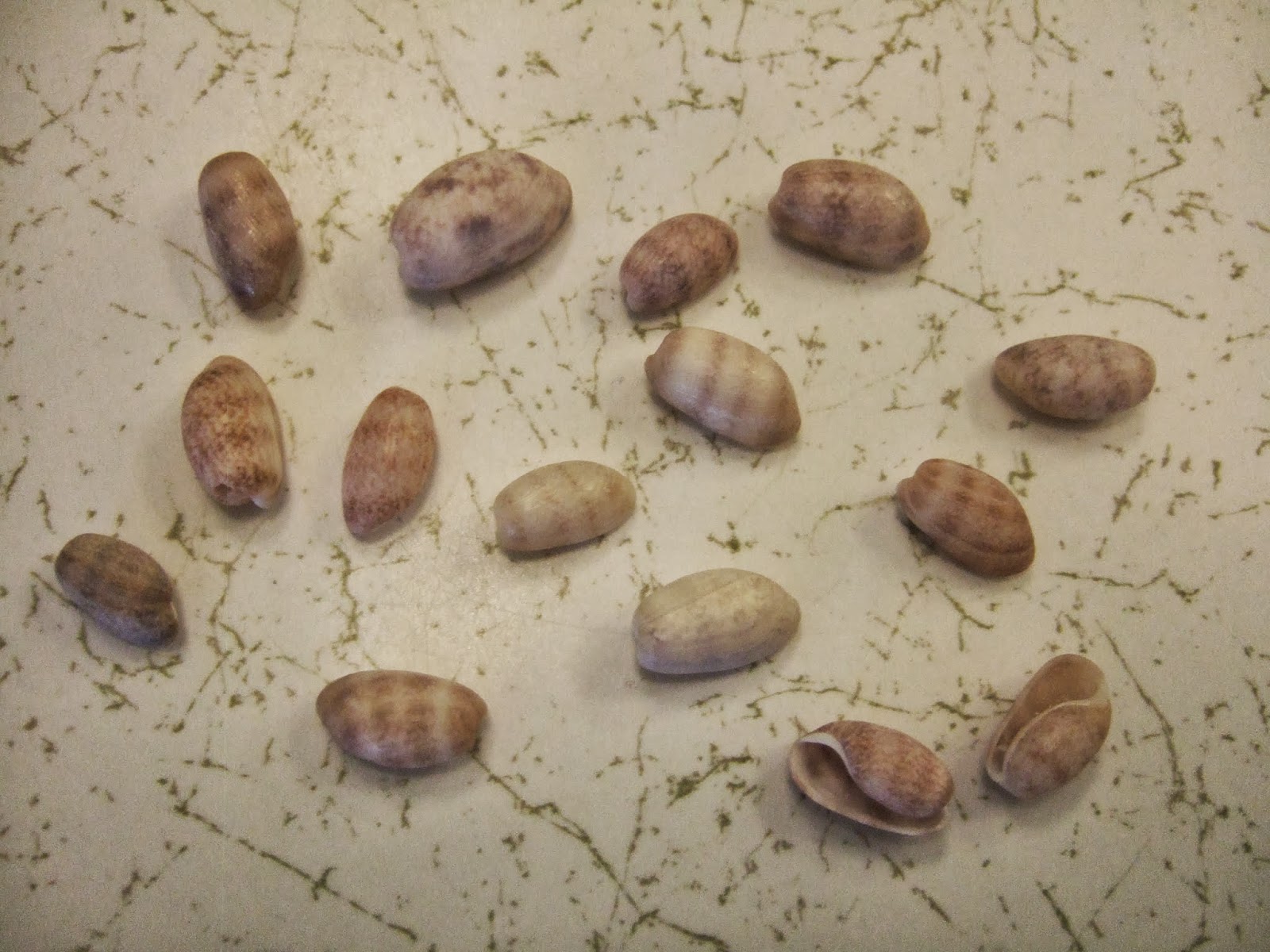
Strate bubbles (Bulla striata) are also called common Atlantic bubbles. Bubbles are gastropods. Bubbles are related to sea hares and nudibranchs. When there foot and mantle are extended, they can completely cover their shell. Unlike most gastropods, they don't have eye stalks; instead their eyes are directly on their head.